 CREATIVE EDGE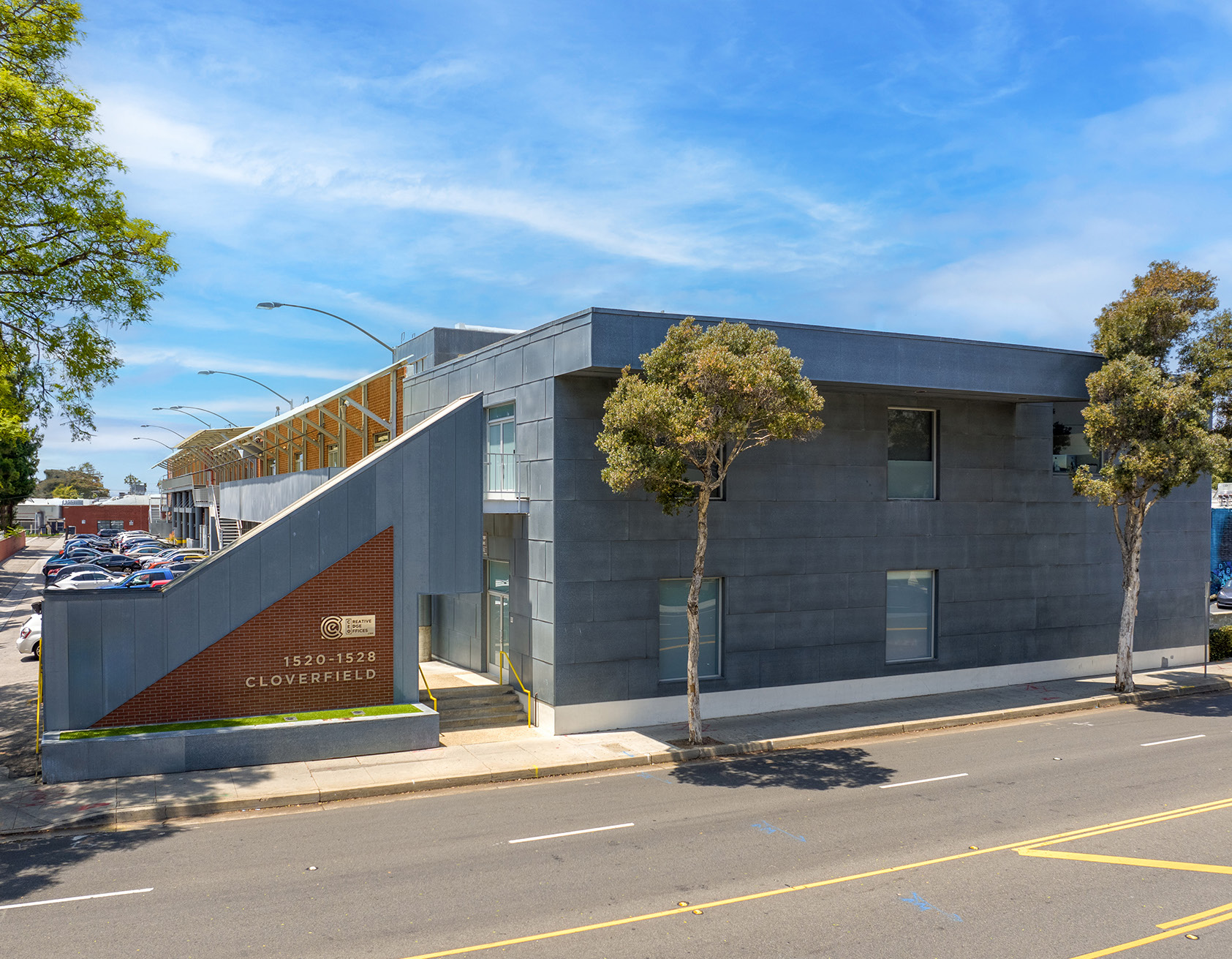
Creative office space grew out of the 1960s–70s artist-loft conversions of New York's SoHo, was pioneered as a marketed commercial product in 1980s Los Angeles, and hardened into a named real-estate category during the late-1990s dot-com boom — finally entering municipal planning language when Santa Monica adopted its Bergamot Area Plan in 2013. No single person coined the term; it emerged from the trade.
The roots: SoHo and the loft
The story starts in deindustrializing American cities. As manufacturing left Lower Manhattan after World War II, artists who couldn't afford studio rents began occupying the empty cast-iron lofts of SoHo — high ceilings, big windows, raw floors, cheap space. The moves were technically illegal under manufacturing zoning until New York formally permitted certified artists to live and work there in 1971. Sociologist Sharon Zukin documented the phenomenon in her 1982 book Loft Living, which showed how creative workers became the advance scouts for the conversion of industrial districts. The lesson latent in SoHo — that creative firms prefer industrial space — is the whole idea that real estate would later package and sell.
Los Angeles makes it a product
The West Coast turned the instinct into an industry. In Culver City, developers Frederick and Laurie Samitaur Smith began buying derelict 1940s warehouses and, in 1986, partnered with the architect Eric Owen Moss. Their first Hayden Tract conversion was built between 1987 and 1990; the work tore warehouses open, sealed them in glass, left the steel exposed, and rented to media, design and ad firms. In 2020 the American Institute of Architects gave the Hayden Tract its Twenty-Five Year Award, crediting it with setting the precedent for the creative-office model.
A few miles west, the typology was already being lived before it had a name. By 1981, Frank Gehry's architecture firm was headquartered in a converted brick warehouse loft at 1520 Cloverfield in Santa Monica — and in 1987, contemporaneously with Hayden Tract, Gehry formally reclad that warehouse in stainless steel. The warehouse-loft-as-creative-office wasn't a marketing concept there; it was simply how one of the era's most important architects chose to work.
The term becomes a category
The dot-com boom scaled the demand. Tech startups, run by young workers with no attachment to corporate norms, actively sought open-plan warehouse and loft space — exposed ducts, concrete floors, daylight. In Los Angeles, the earliest named instance the trade press points to is the advertising agency TBWA\Chiat\Day, which in 1998 opened a 120,000-square-foot open-plan office in a refurbished Playa Vista warehouse. The Los Angeles Business Journal later called it the first local "creative office space" splash. Richard Florida's The Rise of the Creative Class (2002) supplied the theory; WeWork (founded 2010) industrialized the aesthetic; and by 2013, brokerages like CBRE were publishing dedicated "creative office" market reports — proof the phrase had become a defined asset class.
Santa Monica writes it into the code
The term entered formal U.S. planning language in September 2013, when Santa Monica adopted the Bergamot Area Plan — establishing a "Mixed-Use Creative" district and using "creative office" as a land-use category (right down to a parking standard of 3.3 spaces per 1,000 square feet). The neighborhood that codified the term is the same arts corridor that surrounds 1520 Cloverfield.
Where 1520 Cloverfield sits in this story
The Los Angeles chapter above runs through the 1980s, and that is exactly the window in which Frank Gehry reclad the brick warehouse at 1520 Cloverfield Boulevard — in the Santa Monica district the city would later write into the Bergamot Area Plan. Gehry's firm was headquartered in the building from around 1981 until roughly 2001, and in a 1987 commission he wrapped the 1965–66 shell in sand-blasted stainless steel, the vocabulary that later became Edgemar, Bilbao and Walt Disney Concert Hall.
What makes the building unusual is the arrangement rather than the architecture. Gehry redesigned a building he occupied as a tenant — not one he owned, and not one he built from nothing. An architect reworking his own workplace, inside a converted industrial shell, in Santa Monica, in the decade this history describes: that is the creative-office idea being practised rather than marketed.
A caution about what this does and does not prove. We are not claiming 1520 Cloverfield invented creative office, or that it was Gehry's first conversion of an industrial building for creative work. Neither claim survives checking — he was altering existing buildings for creative use well before he reclad Cloverfield. As the rest of this page sets out, no single building or person originated the category; it emerged from the trade across three decades. 1520 Cloverfield is a documented instance from inside that period, in the district that eventually codified it, which is a more interesting fact than a superlative would be.
The documented history of Gehry at 1520 Cloverfield, including the permits.
Timeline: how it happened
- 1971New York City legalizes artist live-work in SoHo's manufacturing lofts — the first land-use recognition of the creative loft.
- 1982Sharon Zukin publishes Loft Living, the canonical study of industrial-to-creative conversion.
- by 1981Frank Gehry's firm is documented operating from a converted brick warehouse loft at 1520 Cloverfield, Santa Monica.
- 1987–90Eric Owen Moss completes the first Hayden Tract warehouse conversions in Culver City (AIA 25-Year Award, 2020).
- 1987Gehry reclads 1520 Cloverfield in stainless steel — the typology lived before it was named.
- 1998TBWA\Chiat\Day opens an open-plan warehouse office in Playa Vista — the earliest named "creative office space" the LA trade press cites.
- 2002Richard Florida's The Rise of the Creative Class frames the demand.
- 2013Santa Monica's Bergamot Area Plan writes "creative office" into the zoning code.
See creative office, at the source
The Creative Edge collection leases architectural creative-office space across the Santa Monica and West LA corridor where much of this history happened.
Book a Tour → What Is Creative Office?Frequently asked questions
Who coined the term "creative office"?
No single coiner is documented. "Creative office" emerged organically in commercial-real-estate trade usage, most likely in Los Angeles during the late-1990s dot-com era. The earliest named instance the LA trade press points to is TBWA\Chiat\Day's 1998 Playa Vista warehouse office.
When did creative office space start?
The typology was practiced from at least the late 1980s — Culver City's Hayden Tract (first conversion 1987) and Frank Gehry's converted Santa Monica warehouse (documented by 1981). As a named, marketed real-estate category it emerged in the late 1990s and solidified by around 2013.
What was the first creative office building?
There's no single documented "first." The AIA credits Eric Owen Moss's Hayden Tract in Culver City (first conversion 1987) with setting the precedent. Frank Gehry's converted warehouse loft at 1520 Cloverfield in Santa Monica is an earlier individual example — both predate the term itself.
Where did creative office space originate?
It has dual roots: New York's SoHo, where artist loft conversions were legalized in 1971 and documented by Sharon Zukin in 1982, and Los Angeles's Westside — Culver City and Santa Monica — where architects and ad agencies turned warehouses into offices for creative tenants from the mid-1980s on.
When was "creative office" first used in Santa Monica?
It entered Santa Monica's formal planning language in September 2013 with the Bergamot Area Plan, which created a "Mixed-Use Creative" district and used "creative office" as an explicit land-use category.
Sources & further reading
- Sharon Zukin, Loft Living: Culture and Capital in Urban Change (1982).
- SAH Archipedia and Architect Magazine — Hayden Tract / Eric Owen Moss (AIA Twenty-Five Year Award, 2020).
- Los Angeles Business Journal — on the 1998 TBWA\Chiat\Day office and the rise of creative office space.
- City of Santa Monica — Bergamot Area Plan (2013).
- Richard Florida, The Rise of the Creative Class (2002).