 CREATIVE EDGE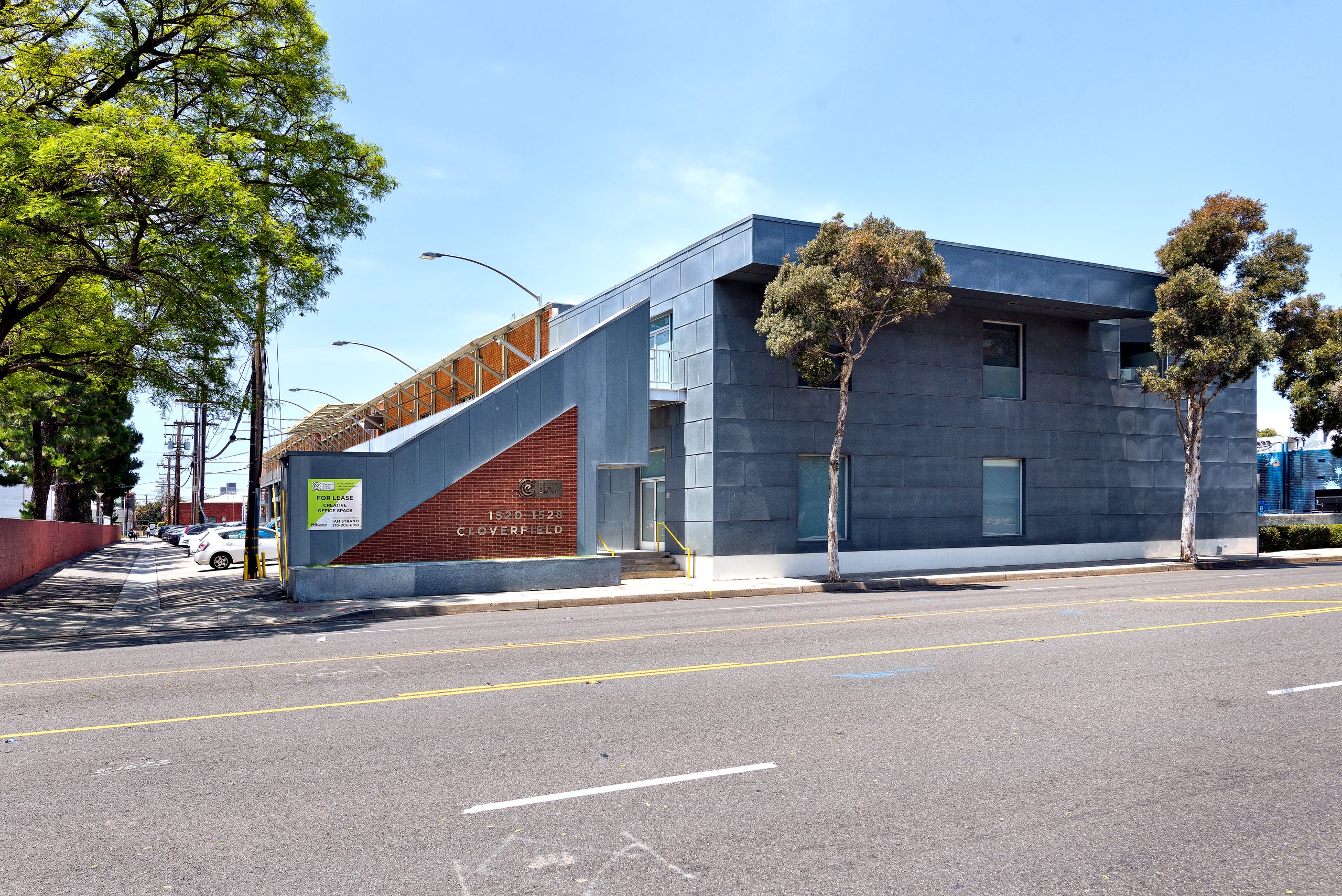
Frank O. Gehry & Associates was headquartered at 1520 Cloverfield Boulevard in Santa Monica from the late 1970s until about 2001. It is one of the few Gehry-occupied, Gehry-altered commercial buildings still standing in private hands — and, unusually, a building Gehry both worked in and redesigned. In a 1987 commission he wrapped the 1960s brick warehouse in sand-blasted stainless-steel canopies and fascia: the same metal vocabulary that would later define Edgemar, the Guggenheim Bilbao, and Walt Disney Concert Hall.
- Address
- 1520–1528 Cloverfield Blvd, Santa Monica, CA 90404
- Building
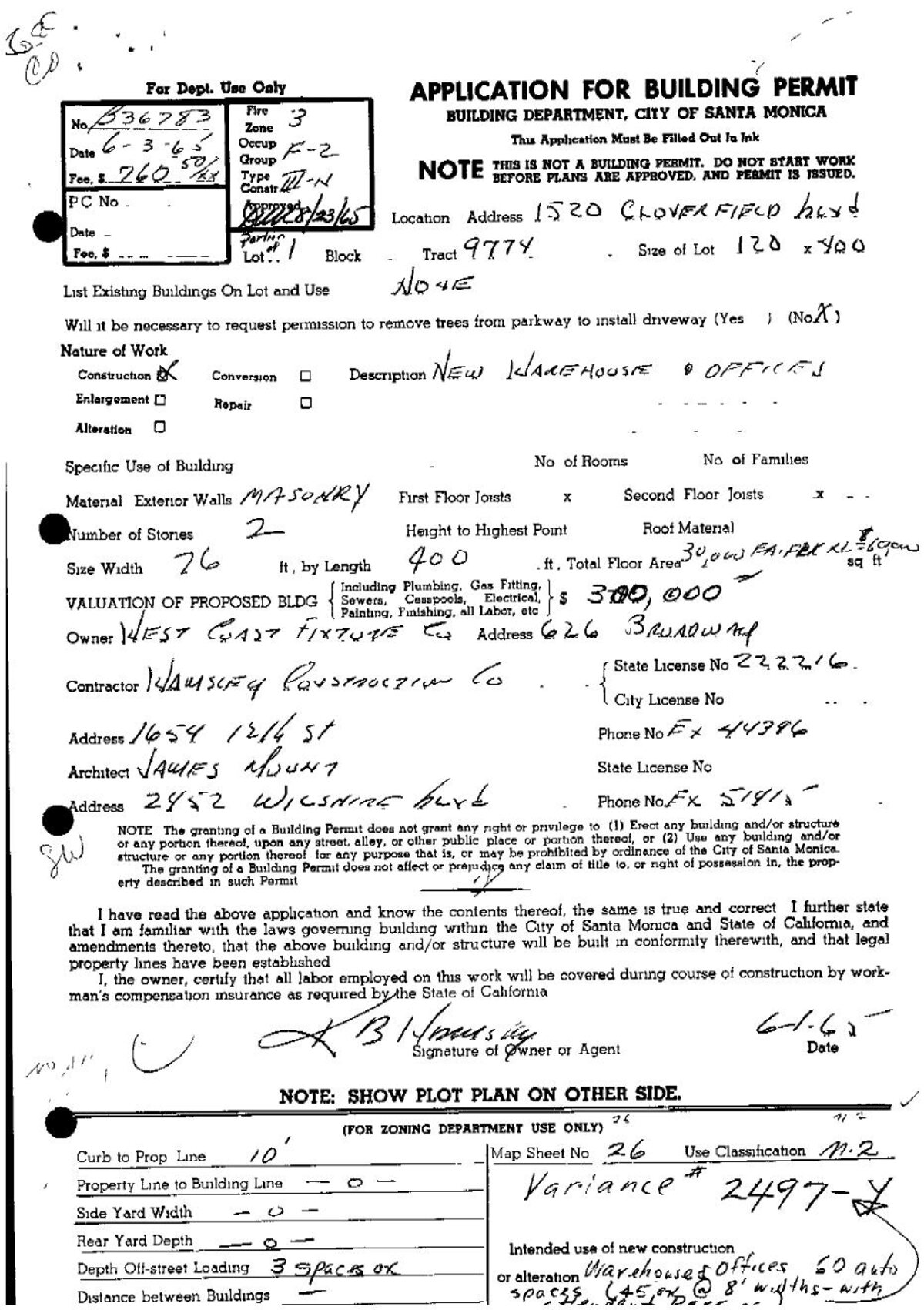
- Two-story brick warehouse, ~60,750 SF, built 1965–66
- Gehry tenancy
- Frank O. Gehry & Associates HQ, late 1970s – ~2001
- Gehry's design
- 1987 remodel — stainless-steel canopies & fascia on the brick shell
- Today
- Creative-office space in Santa Monica's Bergamot arts corridor
The studio years
Gehry founded his practice with Greg Walsh in 1962, but the Cloverfield chapter came later. By the late 1970s the firm had taken the long, top-lit loft at 1520 — and the firm's own records place it firmly at the address by 1981. It stayed through the studio's most consequential era, until the office moved toward Playa Vista around 2001.
Colleagues remembered the loft as much for its art as its drafting tables. The architect Frederick Fisher, who worked there, recalled a space that was "a museum of contemporary art superimposed on an architecture office" — Gehry's collection and friendships from LA's "Cool School" (Robert Irwin, Ed Moses, Billy Al Bengston, Larry Bell and others) lived in the room alongside the models.
It was a giant loft space on Cloverfield, and it was full of sculpture.— Frederick Fisher, architect
What Gehry designed here
The work that came out of the Cloverfield studio is, in effect, the spine of late-20th-century Gehry. Among the projects developed during the firm's years at 1520:
- Loyola Law School and the Aerospace Museum, Los Angeles
- The Temporary Contemporary (now the Geffen Contemporary at MOCA)
- The Chiat/Day "Binoculars" building in Venice
- The Vitra Design Museum, Germany, and the American Center, Paris
- The original 1988 competition design for Walt Disney Concert Hall
It was while the firm was at 1520 Cloverfield that Gehry won the Pritzker Architecture Prize in 1989 — architecture's highest honor.
The building Gehry redesigned
Most landlords are lucky to have a famous tenant. 1520 had a famous tenant who also redesigned the building. In a 1987 commission, Gehry's office reclad the plain 1965 brick warehouse with sand-blasted stainless-steel canopies and fascia — an early, working sketch of the metal language that became the Guggenheim Bilbao (titanium, 1997) and Walt Disney Concert Hall (stainless steel, 2003). The canopies that shade the Cloverfield frontage today are his.
A 60-year timeline
- 1965–66The two-story brick warehouse is built on Cloverfield Boulevard in Santa Monica’s industrial Media District.
- Late 1970sFrank O. Gehry & Associates makes 1520 its headquarters; the firm is documented at the address by 1981.
- 1987In a commission for the building’s owner, Gehry redesigns the exterior — sand-blasted stainless-steel canopies and fascia over the brick shell.
- 1989Gehry wins the Pritzker Architecture Prize while the firm is based at 1520.
- ~2001The practice relocates as it scales toward the Bilbao-and-after era.
- 2017The Getty Research Institute acquires the Frank O. Gehry papers, 1954–1988 (accession 2017.M.66), which name 1520 Cloverfield.
- 2025Frank Gehry dies in Santa Monica on December 5, age 96. The building remains.
- TodayThe warehouse leases as creative office under the name Cloverfield Creative, part of Creative Edge Offices.
For where this building sits in the wider story of the category, see the history of creative office space — including what the record does and does not support.
The studio as a laboratory
The Cloverfield loft was not just an address — it was a working laboratory for a generation of architects. The young designers who passed through the office in these years, among them Edwin Chan and Michael Maltzan, helped shape the work that left the building. Maltzan, reflecting on the era, has suggested that the most important thing Gehry made in those years was the office itself: a culture of making, testing and rebuilding models that became the method behind everything that followed. It was here, in conversation with the artists Claes Oldenburg and Coosje van Bruggen, that the giant binoculars of the Chiat/Day building took shape.
A building he designed for his own landlord
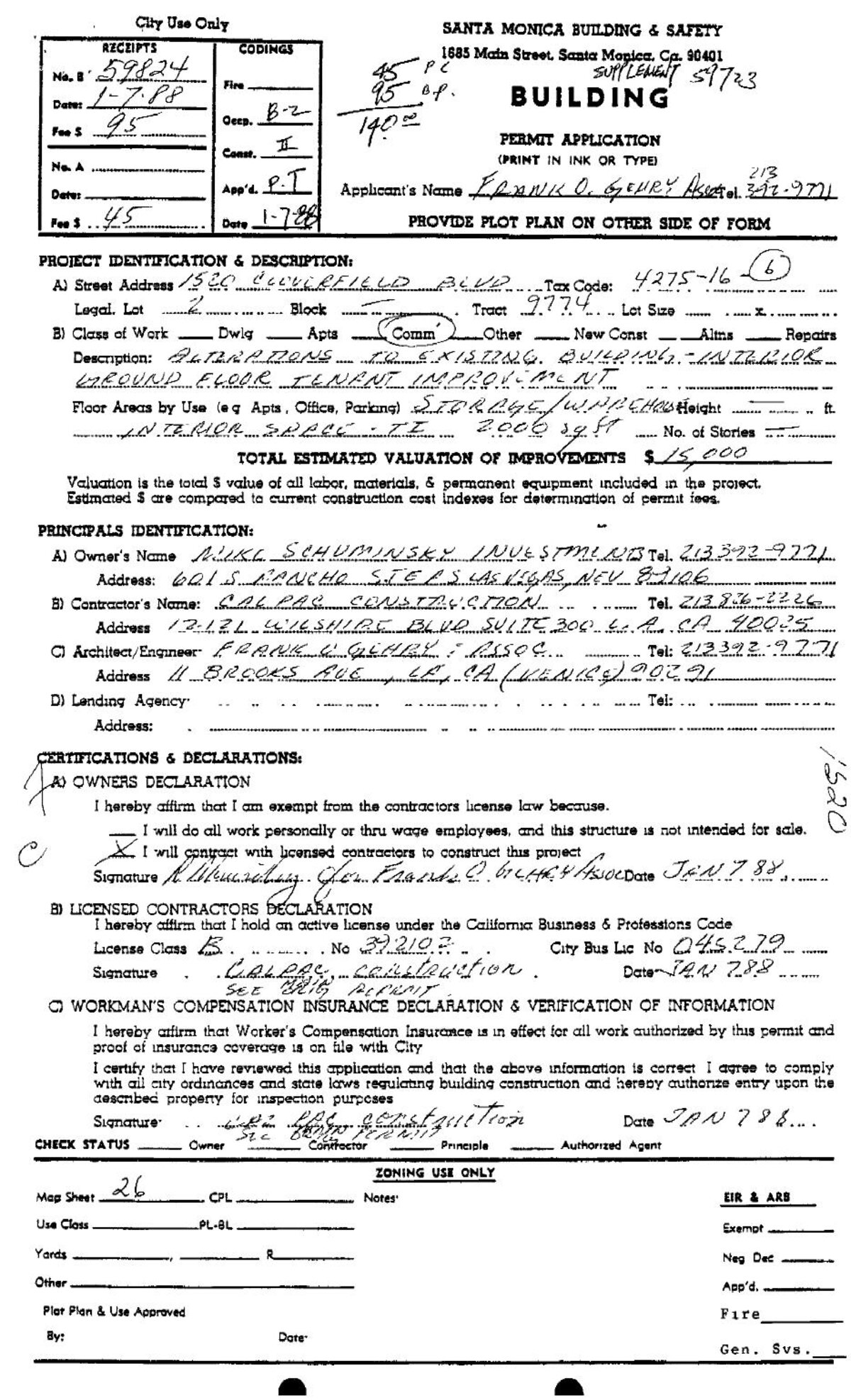
What sets 1520 apart even within Gehry’s own catalogue is the arrangement behind it. Gehry was the tenant; in 1987 he designed the building’s renovation for its owner — an architect reworking the very warehouse he leased. That tenant-designs-for-the-landlord structure is essentially singular in his body of work. The stainless-steel fascia and canopies he added belong to the same family as Edgemar, the 1984–88 Santa Monica complex a short distance away: early, low-budget field tests of the metal vocabulary that would later define the Guggenheim Bilbao and Walt Disney Concert Hall. The lineage even runs a few miles west — Westgate Media Park was later converted by Randall Stout, a senior associate from Gehry’s office.
The record, in his own permits
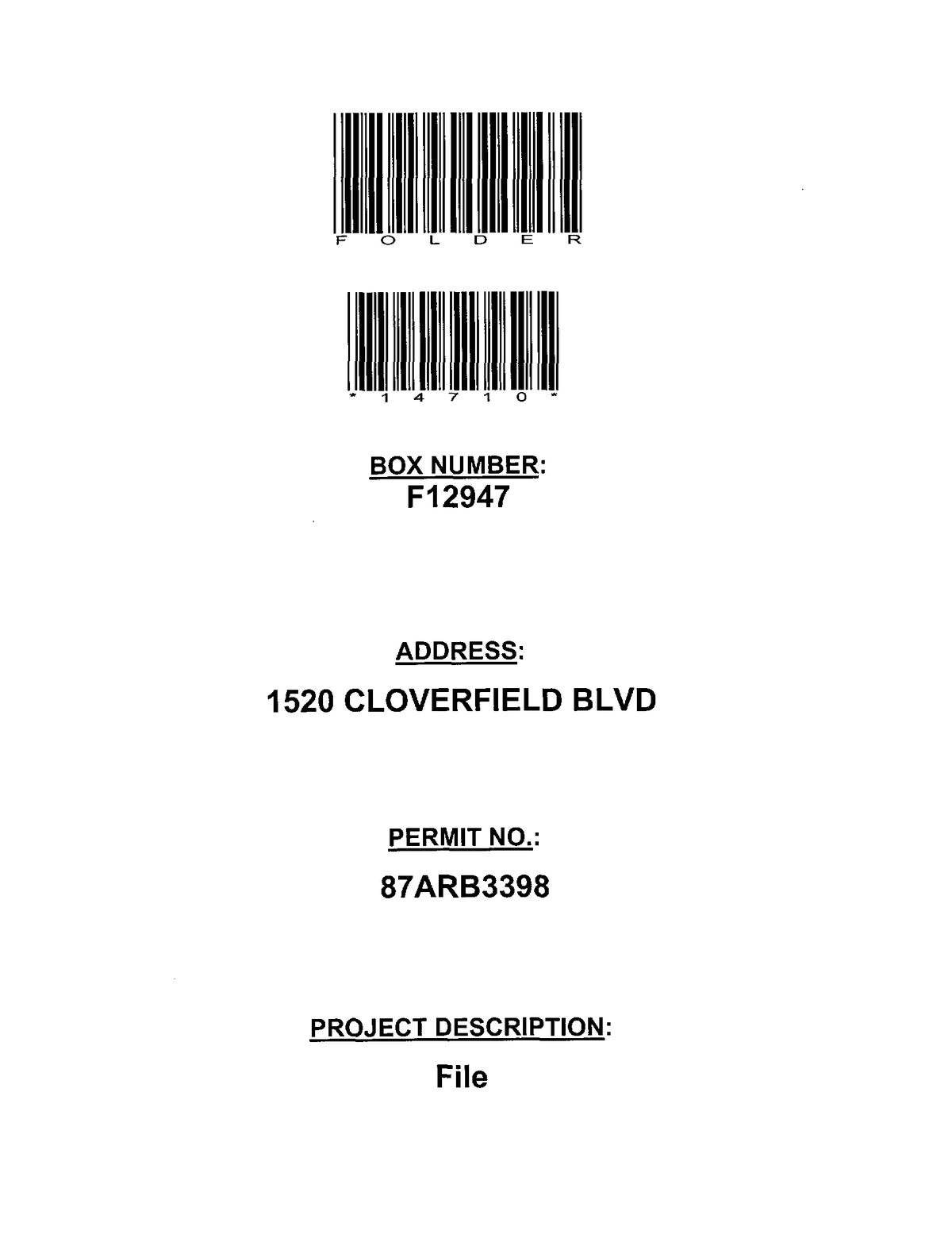
The Gehry chapter isn't lore — it's on file with the City of Santa Monica. These are public records of the building itself:
The "hidden" Gehry
Despite all of it, 1520 is largely absent from the standard Gehry monographs and the official works list — which is exactly why it reads as a discovery rather than a tourist stop. The historical record is real: in 2017 the Getty Research Institute acquired the Frank O. Gehry papers, 1954–1988 (accession 2017.M.66), and the acquisition materials name 1520 Cloverfield among the projects. Frank Gehry died at his Santa Monica home on December 5, 2025, at age 96; the building remains.
1520 today
The warehouse Gehry worked in is now creative-office space — skylit lofts, exposed structure, and his stainless-steel canopies overhead — leasing as Cloverfield Creative, part of Creative Edge Offices. It sits in Santa Monica's Bergamot arts corridor, minutes from the Expo Line and the Westside's media and tech anchors. For production companies, post houses, designers and studios, it is rare thing: a working building with a genuine architectural pedigree.
Primary sources & further reading
The history on this page is grounded in the public record. Key sources:
- Getty Research Institute — Frank O. Gehry papers, 1954–1988 (accession 2017.M.66), which name 1520 Cloverfield.
- The Pritzker Architecture Prize — 1989 Laureate, Frank Gehry.
- Frank Gehry — biography and works.
Lease space in the Gehry building
Skylit creative-office lofts at 1520 Cloverfield, leasing now through Lee & Associates West LA.
Book a Tour → See 1520 CloverfieldFrequently asked questions
Was Frank Gehry's office really at 1520 Cloverfield?
Yes. Frank O. Gehry & Associates was headquartered at 1520–1524 Cloverfield Boulevard in Santa Monica, with the firm documented at the address by 1981 and remaining until roughly 2001. The Getty Research Institute's Frank Gehry papers (accession 2017.M.66) name the Cloverfield project.
When was Gehry's studio at 1520 Cloverfield?
From the late 1970s until about 2001 — roughly twenty-five years, spanning the firm's most influential period. (Marketing that claims an "early 1960s" move-in is incorrect: the building was not constructed until 1965–66.)
Did Frank Gehry design the building itself?
Yes, in part. In a 1987 commission Gehry's office redesigned the building's exterior, wrapping the original 1965 brick warehouse in sand-blasted stainless-steel canopies and fascia — the same material vocabulary later seen at the Guggenheim Bilbao and Walt Disney Concert Hall.
What did Gehry design while based at 1520 Cloverfield?
Work developed during the Cloverfield years includes Loyola Law School, the Temporary Contemporary (Geffen Contemporary at MOCA), the Chiat/Day Binoculars building, the Vitra Design Museum, and the original 1988 design for Walt Disney Concert Hall. Gehry won the Pritzker Prize in 1989 while the firm was at the address.
Can you lease office space in the Gehry building today?
Yes. 1520 Cloverfield is now creative-office space leasing as Cloverfield Creative, part of Creative Edge Offices, with availability marketed by Lee & Associates West LA. Request a tour here.
Is 1520 Cloverfield a historic landmark?
It is not currently a designated City of Santa Monica landmark. The building sits within the city's Bergamot Area Plan arts corridor, and its documented association with Frank Gehry makes it a building of recognized architectural interest on the Westside.
What other Westside buildings share the Gehry lineage?
Westgate Media Park in West LA was converted by Randall Stout, a senior associate from Gehry's office, in the same stainless-steel idiom. It and 1520 Cloverfield are both part of the Creative Edge Offices collection.
Did Frank Gehry die?
Yes. Frank Gehry died at his home in Santa Monica on December 5, 2025, at the age of 96. For roughly twenty-five years — from the late 1970s until about 2001 — his firm was headquartered a short distance away at 1520 Cloverfield Boulevard, the brick warehouse he reclad in stainless steel in 1987.
Can I visit or see Frank Gehry's Santa Monica studio?
1520 Cloverfield is a private, working creative-office building, so there is no public tour of the interior. But the exterior is easy to see: the stainless-steel canopies and fascia Gehry added in 1987 face Cloverfield Boulevard in Santa Monica's Bergamot arts corridor, a short walk from the Expo Line's 26th Street/Bergamot station and the Bergamot Station galleries.
What are Frank Gehry's most famous buildings?
Gehry's best-known works include the Guggenheim Museum Bilbao in Spain, Walt Disney Concert Hall in Los Angeles, and the Louis Vuitton Foundation in Paris. The rippling metal vocabulary of those buildings was first tested on smaller Santa Monica projects — among them his own studio at 1520 Cloverfield, which he wrapped in sand-blasted stainless steel in 1987, and the nearby Edgemar complex.