 CREATIVE EDGE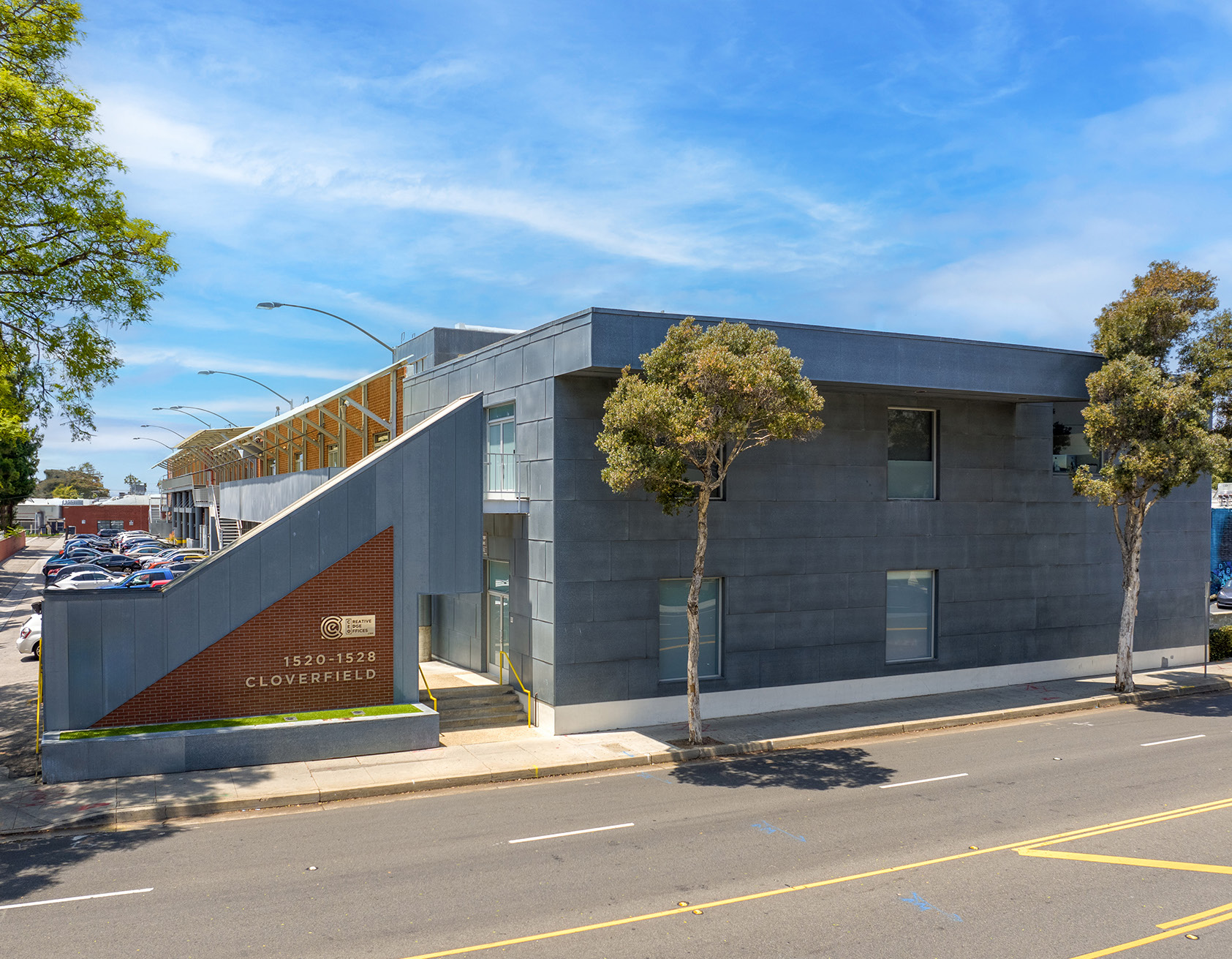
Creative office space is a category of commercial office defined by its physical character, not its industry. The term describes office space — often occupying former warehouses, industrial lofts, or adaptive-reuse buildings — that prioritizes open plans, exposed structure, natural light, and honest materials over the drop ceilings, fluorescent lighting, and partitioned layouts that define traditional Class A office. The tenants are creative, media, tech, and design firms. The buildings are often architectural in their own right.
What makes an office "creative office"?
No single feature defines the category, but creative office space almost always combines several of the following:
- Exposed structure and loft ceilings — original steel, timber, or concrete left visible rather than concealed behind a dropped ceiling grid
- Skylights and natural light — top-lit lofts and large industrial windows that flood the floor with daylight
- Open and flexible floor plans — column grids instead of fixed partitions; spaces that can be reconfigured as teams grow or shrink
- Raw and honest materials — brick, polished concrete, weathered steel, wood — surfaces that carry the building's history
- Adaptive reuse — most creative office buildings began as something else: a warehouse, a factory, a print shop, a film studio. The conversion preserves the bones and the character.
- Brandable and unique space — the opposite of a generic glass tower floor; a creative office tenant can make the space feel like them
Creative office vs. traditional office
The differences show up most clearly in the building itself.
| Feature | Creative Office | Traditional Office |
|---|---|---|
| Ceilings | Exposed structure, loft heights, skylights | Dropped acoustic tile grid, uniform height |
| Light | Natural light a priority; skylights common | Fluorescent or LED overhead; limited windows |
| Layout | Open, flexible, column-grid based | Fixed partitions, cubicles, enclosed offices |
| Materials | Brick, concrete, steel, wood — raw and visible | Carpet, drywall, painted metal — finished and concealed |
| Typical building | Warehouse, loft, industrial adaptive reuse | Multi-tenant glass tower or suburban office park |
| Best for | Creative, media, tech, design, production | Finance, legal, insurance, corporate back-office |
Who leases creative office space?
The tenant base is broad, but clusters around a few industries.
- Production companies and film studios — space for writers' rooms, editing suites, and production offices that needs to flex quickly
- Post-production houses — color, VFX, finishing, and audio; historically some of the most demanding creative-office tenants for infrastructure
- Content and media studios — streaming platforms, digital-first media companies, podcasting and video outfits
- Design and advertising agencies — creative departments that want the space to inspire as much as the work does
- Tech and startups — particularly in entertainment and media tech, where the product and the culture both benefit from a non-corporate environment
The building should feel like the work.— A principle common to most creative-office tenants
Creative office on LA's Westside
Santa Monica and West LA are among the country's deepest creative-office markets. The corridor along Cloverfield Boulevard and Colorado Avenue — anchored by major studios, streamers, music, and gaming companies — draws tenants who want to be close to the industry and in buildings that match the culture. See the full Westside guide.
Creative Edge Offices leases architectural creative-office space in four buildings across the Westside, including 1520 Cloverfield — Frank Gehry's former studio, where exposed brick, stainless-steel canopies, and top-lit lofts define what the category means at its best.
Tour creative office space on the Westside
Four architectural buildings in Santa Monica and West LA. Leasing now through Lee & Associates West LA.
Book a Tour → The CollectionFrequently asked questions
What is creative office space?
Creative office space is commercial office space — typically in a converted warehouse, industrial loft, or adaptive-reuse building — characterized by open floor plans, exposed ceilings and structure, abundant natural light, and raw materials such as brick, concrete, steel, and wood. It is designed for creative, media, tech, and design tenants who want an environment that reflects their work and culture rather than a conventional corporate setting.
What's the difference between creative office and traditional office?
The differences are primarily physical. Traditional office space typically occupies multi-tenant glass towers or suburban office parks with dropped ceilings, fluorescent lighting, fixed partitions, and standard finishes. Creative office space is usually in an adaptive-reuse building — a former warehouse, loft, or factory — with exposed structure, skylights, open plans, and honest materials. The environment is more flexible, more brandable, and more visually distinctive.
What is adaptive reuse / converted warehouse office?
Adaptive reuse refers to repurposing an existing building for a new use rather than demolishing and rebuilding. In the creative-office context, it most often means converting a former warehouse, factory, or industrial building into office space while retaining the original structure, materials, and character — exposed brick, steel trusses, concrete floors, skylights — that give the space its identity. Many of the most sought-after creative office buildings in Los Angeles began as warehouses or production facilities.
Who is creative office space best for?
Creative office space works best for production companies, post-production houses, content and media studios, design and advertising agencies, and tech and startup firms — particularly those in entertainment, media, and creative industries. The open, flexible layouts suit teams that change size frequently; the character and brandability of the spaces matters to companies whose culture is part of their product.
Where can I find creative office space in Los Angeles?
Santa Monica and West LA are among the strongest creative-office markets in Los Angeles, anchored by major studios, streamers, music, and gaming companies along the Cloverfield/Colorado corridor and around the Bergamot arts district. Creative Edge Offices leases architectural creative-office space across four buildings on the Westside, including 1520 Cloverfield — Frank Gehry's former studio. Request a tour here.
Why is it called "creative office"?
The term emerged in Los Angeles real estate to describe adaptive-reuse loft and warehouse space favored by creative industries — film, advertising, design, music, and tech — as distinct from the dropped-ceiling floors of a conventional Class A tower. "Creative office" refers less to a single style than to a category: open, light-filled, character-rich space in a building with a story, usually one that started life as something other than an office.
What are some famous examples of creative office buildings?
Well-known Los Angeles examples include Frank Gehry's former studio at 1520 Cloverfield in Santa Monica, the sculptural buildings of the Hayden Tract in Culver City (designed by Eric Owen Moss), and Gehry's Chiat/Day "Binoculars" building in Venice. Nationally, converted warehouse and loft districts in New York's SoHo, San Francisco's SoMa, and Chicago's Fulton Market are often cited as the roots of the creative-office idea.
Creative office vs. coworking — what's the difference?
They're different things. "Creative office" describes a type of space — an architectural, adaptive-reuse building — that a company leases directly. "Coworking" describes a business model: a membership operator (such as WeWork or Industrious) that subdivides space and rents desks or suites by the month. A creative-office building can house coworking, but the two terms answer different questions — one is about the building, the other about how it's rented.